


Onsen and Girls
3.072.00 Reviews
App Specs
- Version
- 1.0.7
- Updated On
- License
- Free
- Downloads
- 100,000+
- Developer
- Fantasy Future
- Categories
- Card
- Platform
- Android
Screenshots



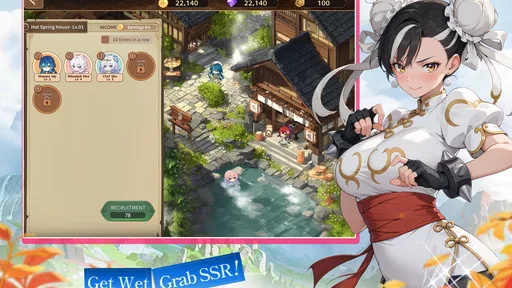
 Analysis by AppCompare
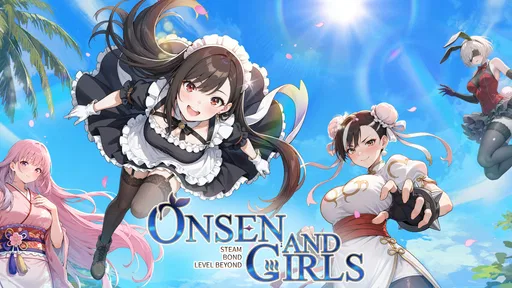
Onsen and Girls is a free card game with an idle RPG structure from Fantasy Future. I approached it expecting a low-pressure collection game, and that is broadly what it offers: character pulls, gradual development, and a theme built around an onsen setting and its cast of girls. The mature presentation is important from the start, because this is not a family-friendly card game despite its simple, accessible format.
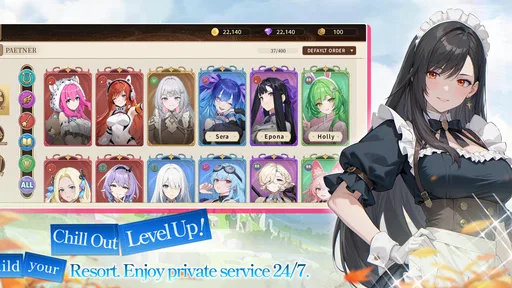
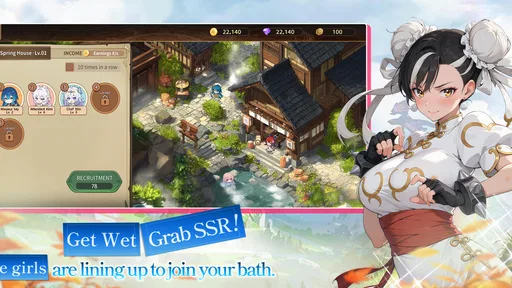
My first impression is that the game is aimed at players who enjoy checking in, improving a roster, and watching progress accumulate rather than controlling every battle manually. Its store summary highlights a very large pull opportunity and LR heroes, while the short description keeps the pitch extremely simple: Onsen and Girls. That combination tells you more about the intended mood than a detailed tactical card battler would. It is a collection-focused idle experience, not a replacement for a deep strategy game.
The current release is version 1.0.7, and the game has reached over one hundred thousand installs. Its average rating sits at three out of five from around four hundred ratings, with roughly seventy written reviews. I read that overall reception as mixed rather than disastrous: enough people are interested in the concept to try it, but the experience clearly will not suit everyone. I would treat it as a niche recommendation for fans of idle character collectors, not an automatic choice for every mobile RPG player.
How the current version feels to play
I’d use this section to set expectations for the current build: the game’s appeal is its short, repeatable collection routine, not hands-on tactical play. I’d focus on whether that rhythm feels satisfying over several visits, then consider which small habits make each check-in more purposeful.
A collection loop built for short visits
The central appeal is the rhythm of obtaining characters, strengthening them, and returning later to see what has accumulated. That rhythm works well when I have only a few minutes available. I can make a little progress during a commute, a lunch break, or while waiting for an appointment without committing to a long session.
The trade-off is that the same convenience can make the game feel passive. Players who want to make decisions every few seconds, aim attacks, position units, or build elaborate decks may find the idle format too light. The card label may attract people expecting a traditional card game, but the experience is closer to a character-collection RPG with card-like presentation and pulling at its center.
The onsen theme gives the game a recognizable identity, although it also reinforces the mature tone. I would not open it casually around children or in a shared public setting. The content rating is Mature 17+, so adults should consider that rating before installing rather than treating the cheerful art direction as a sign that the game is suitable for younger players.
Worth Reading Before You Choose

EA SPORTS FC Mobile 26 Is a Bigger Football Game, but It Takes Time

Flipboard Shows What News Apps Must Do Beyond the Feed

Switching to Android Auto Means Rethinking Your Driving Routine

Google Calendar Makes a Crowded Week Easier to Manage

Ludo King Makes the Most of the Minutes Between Plans

Baby Panda World Brings Quick Play to Modern Phones, but Its Game Library Feels Busy
Why the pull system changes the way I play
Pull-based games create two different kinds of motivation. One is the excitement of seeing a new character arrive; the other is the practical question of whether that character actually improves the team I am building. In Onsen and Girls, I would resist spending immediately just because a pull looks tempting. The better habit is to decide what the current roster lacks first, then use free opportunities with a specific purpose.
The promise of ten thousand pulls is a particularly strong hook, but it should not be confused with a guarantee that every result will be useful. Large quantities of pulls can produce a feeling of abundance while still leaving a player sorting duplicates, weaker characters, or units that do not fit the preferred lineup. My advice is to judge the game by the quality of the progression after the excitement, not by the size of the opening invitation.
LR heroes also create a natural long-term target. That can make the roster feel aspirational, but it may encourage chasing rarity before understanding the rest of the system. I would first learn which upgrades are reliable, which resources are scarce, and whether a lower-rarity team can carry normal progress. Saving resources until those answers become clear is more useful than reacting to every flashy character.
The practical routine I would use
If I were starting today, I would divide play into three short routines. First, I would collect everything available and complete the simplest progression tasks without spending premium resources. Second, I would strengthen a small core group rather than spreading materials across every new arrival. Third, I would return later to claim idle gains and check whether a new pull changes the team’s balance.
This approach matters because idle RPGs often punish unfocused development more than active games do. A player can feel busy while making little meaningful progress if every character receives a small upgrade. Concentrating on a dependable group makes it easier to tell whether the game is improving or merely generating more menus and rewards.
A useful everyday scenario would be a player who has ten minutes before work. I would use that time to collect accumulated rewards, perform the available free pulls, compare the new character with the current frontline, and spend only the resources tied to an immediate improvement. I would then close the game instead of repeatedly checking for another reward. That keeps the experience relaxing rather than turning every spare moment into another request to engage.
What the version number tells existing players
Version 1.0.7 suggests that the game is already beyond its first launch build, so existing users are not dealing with the very first iteration. That is relevant when deciding whether to return: the product has had room to receive at least some early refinement, and new players are joining an established release rather than a completely untouched prototype.
At the same time, I would not read the version number as proof that every rough edge has disappeared. A later build can still feel unfinished in areas such as balance, explanation, pacing, or the clarity of purchase decisions. The current version is evidence of ongoing product life, not a promise of a particular future roadmap.
For someone who played an earlier build, the sensible test is practical. Reopen the game and check whether the opening flow is easier to understand, whether the roster gives a clearer reason to experiment, and whether progression feels less dependent on repeated spending prompts. Those are the changes that matter to an existing player, even more than a new character or a refreshed visual screen.
Free entry, but a paid economy underneath
The game costs nothing to download, which makes it easy to sample without committing money first. However, in-app purchases range from $0.99 to $99.99 per item. That is a wide spread, and it changes my recommendation for anyone who is vulnerable to impulse spending. The free entry point is genuine, but the surrounding economy deserves deliberate boundaries.
I would disable or protect purchases before handing the device to a younger family member, even though the mature rating already makes this an adult-oriented title. I would also avoid buying during the first session. Early rewards can make a game feel unusually generous, and that is exactly when it is hardest to know whether a purchase solves a real problem or simply extends the initial excitement.
The strongest way to enjoy this kind of game without frustration is to define a personal rule before playing. That might mean remaining free-to-play, setting a fixed monthly limit, or buying only after several sessions have shown that the routine remains enjoyable. None of those choices makes the game better mechanically, but they prevent the payment system from deciding how much the game is worth to me.
Where it differs from ordinary card games
Compared with a traditional collectible card game, Onsen and Girls appears designed around automated growth and character acquisition rather than careful turn-by-turn deck construction. That makes it easier to pick up and more suitable for intermittent play. It also means the satisfaction comes from roster development and repeated improvement, not from outplaying an opponent with a clever sequence.
Compared with a standard idle RPG, the card framing and pull emphasis make collection feel more central. Players who like cataloguing characters and pursuing rare heroes may prefer this focus. Players who mainly want an action game, a story-heavy role-playing adventure, or a competitive card battler should choose a different category instead of expecting this title to transform into one.
That distinction is especially important for people who dislike duplicate-focused progression. Collection games can make a new character feel exciting one moment and redundant the next. If I wanted a game where every unlock immediately introduced a fresh mechanic, I would look toward a more tactical or campaign-driven alternative. Here, the pleasure is more gradual and repetitive by design.
Who should try it, and who should skip it
I would recommend it to an adult player who enjoys idle RPG routines, character pulls, and a light card-game presentation. It is a reasonable fit for someone who wants a mobile game that can be checked briefly throughout the day. The onsen theme may also appeal to players looking for something more specific than another generic fantasy setting.
I would skip it if I wanted a fully manual battle system, a serious deck-building challenge, or a game that can be comfortably played by all ages. I would also be cautious if the prospect of rare heroes and paid packages makes it difficult to stop spending. The mature rating and the purchase range are not minor footnotes; they are part of deciding whether the game belongs on your phone at all.
Device compatibility is relatively broad because it requires Android 6.0 or later. That makes it accessible to people using older Android hardware, although compatibility alone does not guarantee that every device will feel equally smooth. I would keep expectations sensible on aging phones and judge the experience after the opening session rather than assuming the minimum operating-system requirement reflects modern performance.
Remaining friction in the current experience
The mixed average rating is the clearest warning sign for me. A three-out-of-five result indicates that the concept attracts attention but does not consistently satisfy the people who try it. I would expect disagreements around pacing, monetization, repetition, or the gap between the promotional pull fantasy and the day-to-day routine. Those are common pressure points in this style of game, and the rating suggests they should be taken seriously here.
Another concern is the limited clarity of the store pitch. The summary tells me about pulls and LR heroes, but it does not explain enough about what makes the actual battles, progression, or character development distinctive. That may be fine for a player already familiar with idle RPGs, but newcomers could install it with the wrong expectations. I would approach it as a collection loop first and discover the depth gradually.
The mature presentation can also narrow the audience. Some players will see it as the main attraction, while others will find it distracting or simply unsuitable. Because the theme is so closely tied to the title and store wording, I would not recommend installing it hoping to ignore that aspect. It is better to accept the tone before starting than to be surprised by it later.
What I would watch as the game develops
For future updates, I would watch whether the developer improves the explanation of progression and makes the difference between useful and merely rare characters easier to understand. Clearer guidance would help new players spend resources intelligently instead of learning through costly mistakes.
I would also pay attention to whether the balance keeps free players involved after the opening period. A generous start is helpful, but long-term health depends on whether a player can continue making meaningful progress without feeling forced toward the most expensive offers. The current purchase range makes that an important issue for anyone considering a long commitment.
Existing users should watch for changes that affect their established teams rather than chasing every new addition. If a future version introduces stronger heroes or reworks progression, the best response may be to reassess resource priorities instead of immediately rebuilding the entire roster. Keeping a reserve of materials is a sensible habit in any evolving collection game.
My final take after weighing the trade-offs
Onsen and Girls has a clear audience: adults who like idle character collection, frequent pulls, and a themed presentation that can be enjoyed in short sessions. I appreciate that it is easy to sample for free and that the current version gives the game a more established feel than a brand-new launch. The promise of rare LR heroes and a huge pull count gives collectors a reason to look closer.
Still, I would not call it a universal recommendation. The three-out-of-five average reflects a real risk that the routine may feel repetitive or that the monetization may become more prominent than the gameplay. The mature rating limits where it can be played, and fans of traditional card strategy may be disappointed if they expect deep manual decision-making.
My advice is to install it only if the idle RPG format and the onsen-themed cast genuinely appeal to you. Spend the opening sessions learning the roster, focus upgrades on a small core, and treat paid pulls as optional rather than necessary. The best way to enjoy this game is to control the pace yourself instead of letting the pull system control your attention or budget. With that mindset, it can be a pleasant short-visit collection game; without it, a more tactical card title or a less purchase-driven RPG would probably be the better choice.
Pros
- Relaxing hot-spring setting with a charming Japanese atmosphere.
- Simple controls make the game easy to pick up and play.
- Lighthearted character interactions add personality to the experience.
- Short play sessions suit casual gaming on mobile devices.
- Colorful artwork gives the scenes a pleasant visual style.
Cons
- The gameplay may feel repetitive after extended sessions.
- Progress can be slow without regular play or patience.
- Some content may appeal mainly to fans of anime-style games.
- The small-screen interface can feel crowded on certain devices.
- Limited challenge may disappoint players seeking deeper mechanics.
FAQs for Onsen and Girls
What is Onsen and Girls about?
Onsen and Girls is a relaxing mobile game centered on visiting and managing Japanese hot spring locations with a cast of charming female characters. Its appeal comes from the combination of casual progression, character interactions, scenic onsen environments, and light management or collection elements. The experience is generally designed for players who prefer a calm pace rather than intense action or competitive gameplay.
Is Onsen and Girls free to download and play?
The game can generally be downloaded without an upfront purchase, but availability and pricing may vary depending on whether you use Android or iOS and which region your account is registered in. As with many free mobile games, optional in-app purchases may be included for premium currency, items, or faster progression. Players should review the store listing and purchase settings before downloading, especially if children may access the device.
Does Onsen and Girls require an internet connection?
An internet connection may be needed for the initial download, account or game-data verification, advertisements, events, updates, and in-app purchases. Some basic sections may work temporarily without a connection, but offline functionality should not be assumed. If you plan to play while traveling, open the game beforehand and check whether your progress and essential features remain available when Wi-Fi or mobile data is disabled.
Is Onsen and Girls suitable for children?
Parents should check the official age rating and the store description before allowing children to play. Although the title has a cute and relaxing presentation, character designs, dialogue, themes, advertisements, or optional purchases may not be appropriate for every age group. It is also advisable to enable parental controls, restrict in-app purchases, and review the privacy permissions requested by the application.
Does Onsen and Girls save progress across devices?
Progress synchronization depends on the version of the game and the account or backup system it supports. Before changing phones, uninstalling the app, or moving between Android and iOS, look for an in-game account link, transfer code, cloud-save option, or restore feature. Without a confirmed backup, locally stored progress could be lost, and cross-platform transfers may not always be supported.


